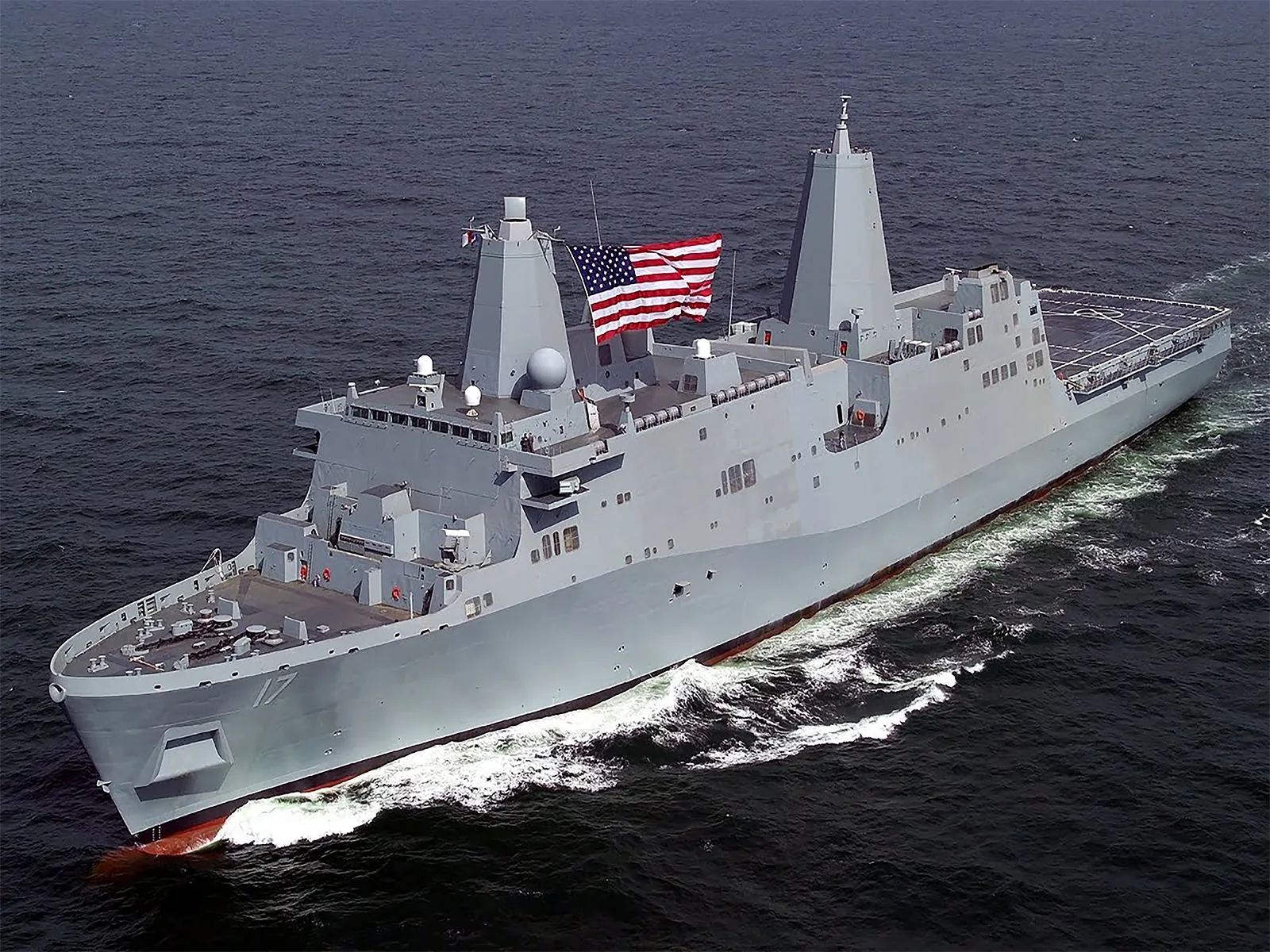
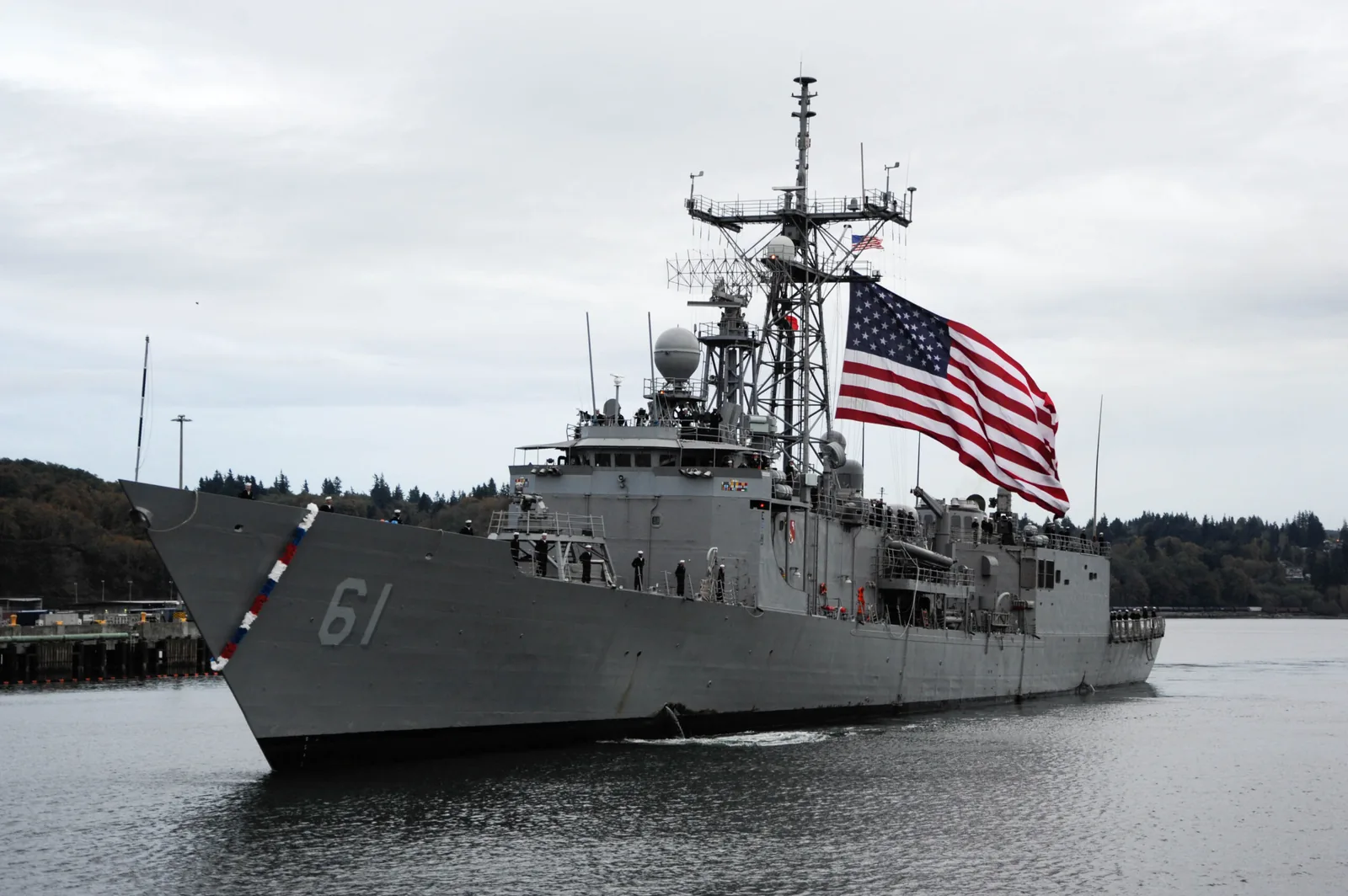
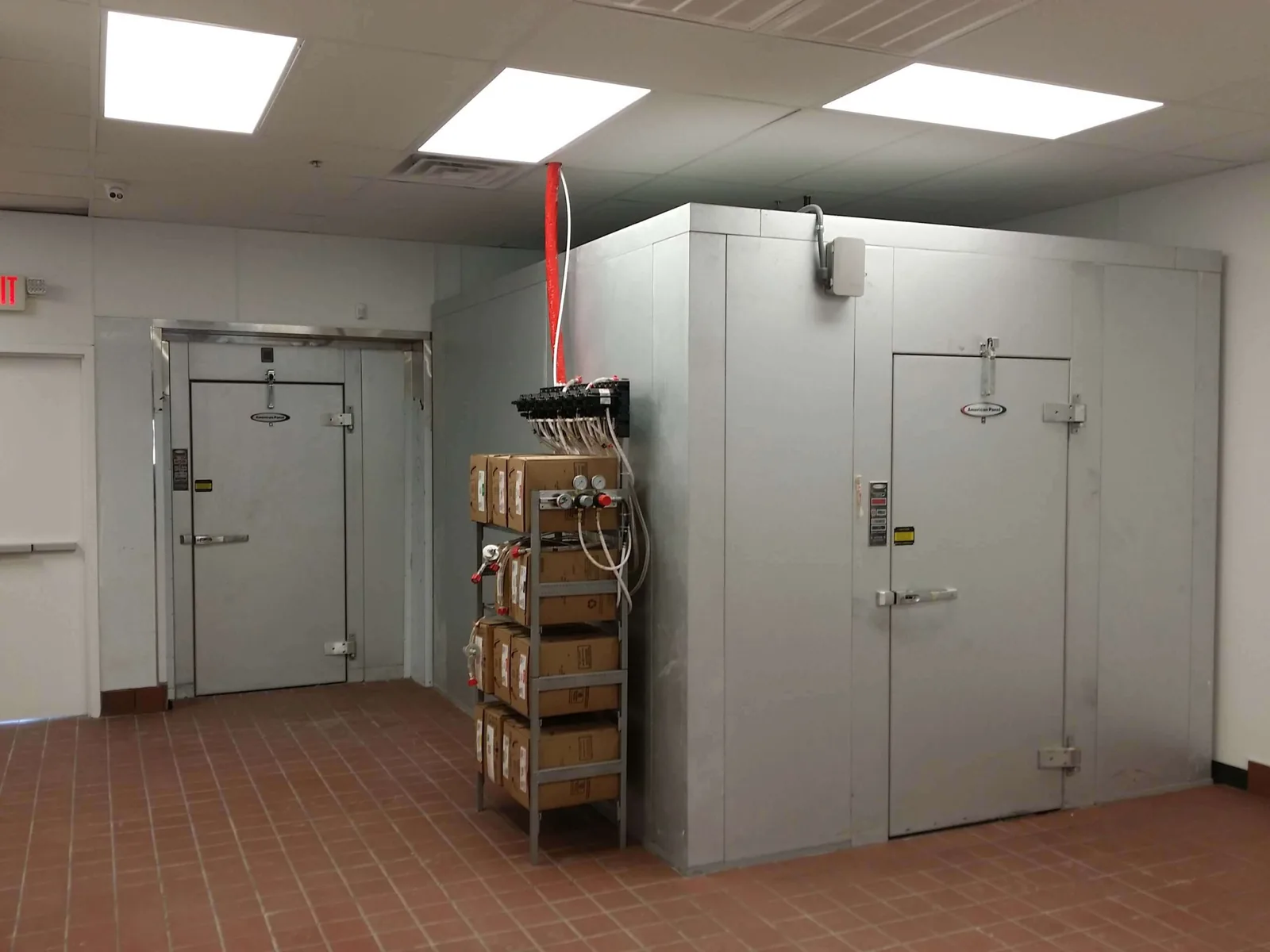
Foster has been a U.S. Navy approved supplier for over seventy-five years. Our marine-rated walk-ins ship to aircraft carriers, submarines, supply vessels, and shore installations — engineered to hold temperature through shock, vibration, and salt-air exposure that destroys consumer-grade refrigeration.
Civilian walk-ins fail at sea. Foster's marine-rated units use the same panel and refrigeration platform proven on naval supply chains since 1946.
DETAIL · M1
SCALE · 1:24
A walk-in built for a restaurant kitchen will not survive at sea. The difference is not the refrigeration — it is everything around it.
Shipboard refrigeration takes punishment a land-based unit never sees. Underway replenishment and weapons shock load the structure; main-propulsion and auxiliary machinery vibrate the hull continuously; and salt air corrodes ordinary fasteners, hinges, and panel skins within a season. Foster's marine units answer each of these: shock resistance is verified to MIL-S-901D Grade A, sustained vibration to MIL-STD-167-1 Type 1, and corrosion resistance to 2,000 hours of ASTM B117 salt-spray — with marine-grade stainless hardware and no wood anywhere in the doors, frames, or floors to rot or warp.
The payoff is the same one civilian operators value: a sealed, foamed-in-place polyurethane panel (roughly R-7 per inch) holds temperature to ±1°F through constant door traffic, and a 3/16″ aluminum diamond-plate floor rated to 750 lb/ft² takes loaded carts and pallet jacks. The construction the Navy approved is the construction Foster ships to restaurants, hospitals, and cold storage nationwide.
The construction the Navy approved is not reserved for gray hulls. Foster ships the identical marine-rated platform to commercial vessels that face the same salt, motion, and duty cycle at sea.
A refrigerator on a fishing vessel, yacht, ferry, or offshore rig lives in the harshest environment refrigeration ever sees: constant hull vibration, pitch and roll that shifts loaded shelving, wash-down and salt spray that pit ordinary hardware, and days or weeks between any chance of service. Foster's marine units answer all of it with the same no-wood, foamed-in-place, marine-grade-stainless construction the Navy specifies — so the box holds ±1°F whether it is bolted to a pier or riding a Bering Sea swell.
Because every unit is custom-built, panel layout, door swing, and the condensing arrangement are engineered around the vessel — tight companionways, low overheads, and remote or deck-mounted condensers included. Ask about 316 stainless skins and heated door frames for freezer service in wet, cold conditions.
Fitting out a commercial or recreational vessel? See Foster marine refrigeration for yachts, fishing vessels, ferries, cruise ships, and offshore rigs.
Foster ships under federal contracts. We provide the certs, the drawings, and the compliance documentation procurement officers need — without making you chase down a supplier.
Foster supports federal and naval procurement and can provide the registration, certifications, and compliance documentation a contracting officer needs. Foster is registered in the federal system under CAGE code 89729 and SAM.gov UEI CHGKAELDDRP5 (Foster Refrigerators Enterprise Inc, Hudson, NY) — an active manufacturer with a documented history of U.S. Navy / DLA Maritime and Veterans Affairs contract awards. Current GSA ordering details are furnished on request with a federal quote package — just tell us your contract vehicle and we'll send the paperwork that matches it.
DETAIL · P2
SCALE · 1:12
Foster's engineering team in Hudson takes calls directly. Tell us your deck plan, install constraints, and delivery window — we'll quote, draw, and ship.
A marine-rated walk-in is built to survive shock, continuous vibration, and salt-air corrosion that destroy land-based refrigeration. Foster's marine units use 26-gauge galvanized, foamed-in-place panels with no wood in the doors, frames, or floors, marine-grade stainless hardware, and are verified to MIL-S-901D Grade A shock, MIL-STD-167-1 Type 1 vibration, and 2,000 hours of ASTM B117 salt-spray. The refrigeration is a sealed unit that holds temperature to ±1°F through the motion and duty cycle of a vessel at sea.
Yes. Foster has been a U.S. Navy approved supplier since 1946 and is registered in the federal system under CAGE code 89729 and SAM.gov UEI CHGKAELDDRP5 (Foster Refrigerators Enterprise Inc, Hudson, NY), verifiable at cage.dla.mil and sam.gov. The entity is an active manufacturer with a documented history of U.S. Navy / DLA Maritime and Veterans Affairs contract awards. NAVSEA drawings, material test reports, and compliance certifications are provided with a federal quote package.
MIL-S-901D is the U.S. Navy's high-impact shock test for shipboard equipment. It verifies that a unit keeps working after the shock of underway replenishment, weapons fire, or a nearby explosion. Grade A means the equipment is required for the ship's mission and must survive without failure. A walk-in that meets MIL-S-901D Grade A will not lose its door seal, panel joints, or refrigeration under shock loads that would destroy a commercial unit.
Yes. The same marine-rated platform ships to commercial fishing and processing vessels, yachts, ferries, cruise ships, offshore rigs, and research vessels. Every unit is custom-built around the vessel's space, with options for 316 marine stainless skins, heated freezer door frames to prevent frost heave, and remote or deck-mounted condensers for tight engine spaces.
A custom marine or naval walk-in typically takes about 4 to 6 weeks to build, depending on size, finish, and refrigeration configuration. Federal and naval orders that require specific NAVSEA drawings, material test reports, or trade-agreement documentation can vary; Foster's engineering team confirms lead time against your contract vehicle and specification.